


What is Oyster Farming?
Oyster farming, or oyster aquaculture, involves cultivating oysters in controlled environments for commercial purposes. This practice provides a sustainable seafood source and significantly contributes to marine health. Typically, these farms are located in coastal areas where conditions are optimal for oyster growth.
The Process of Oyster Farming in California
Oyster farming in California has gained traction due to effective sustainability efforts and its positive economic impact. Here's a look at the process:
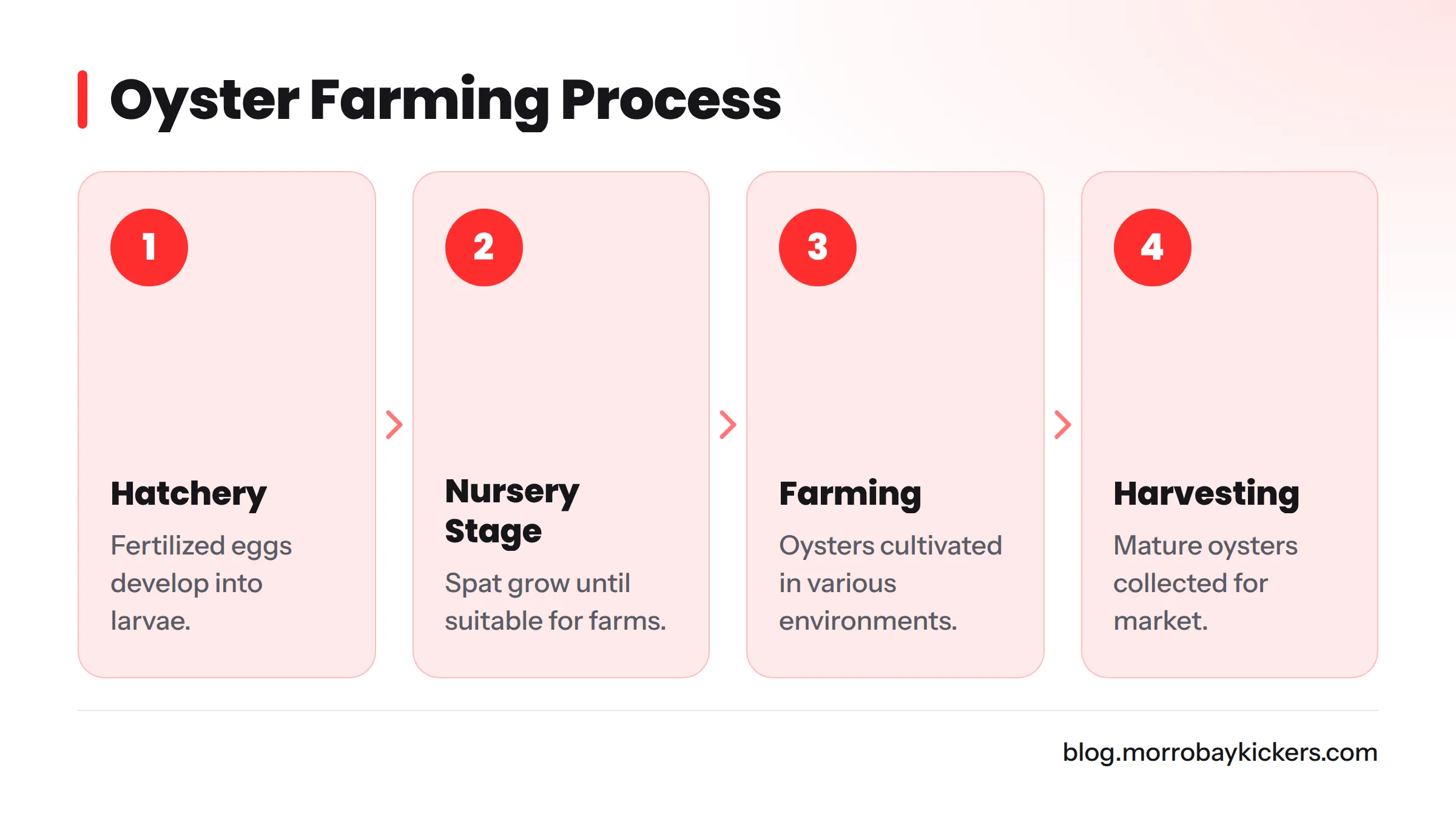
From Seed to Harvest
- Hatchery: The journey begins in a hatchery where fertilized eggs develop into larvae. Farmers nurture these larvae until they become spat - tiny juvenile oysters.
- Nursery Stage: The spat are subsequently moved to nurseries, allowing them to grow until they reach a size suitable for transfer to farms.
- Farming: Oysters are cultivated in varied environments, such as the intertidal zone, submerged panels, or floating cages. They typically reach maturity in 18 to 30 months before harvest.
- Harvesting: Once mature, oysters are collected and prepared for market, ensuring they meet quality standards.
Farming Techniques: Bottom Culture vs. Rack and Bag
Oyster farmers employ different methods based on environmental conditions and desired results:
| Method | Description | Pros | Cons |
|---|---|---|---|
| Bottom Culture | Oysters grow directly on the seabed. | Low maintenance, natural growth | Vulnerable to predation |
| Rack and Bag | Oysters are placed in bags on racks above the seabed. | Reduced predation, easier access | Higher setup costs |
Benefits of Oyster Farming
Oyster farming offers a range of advantages:
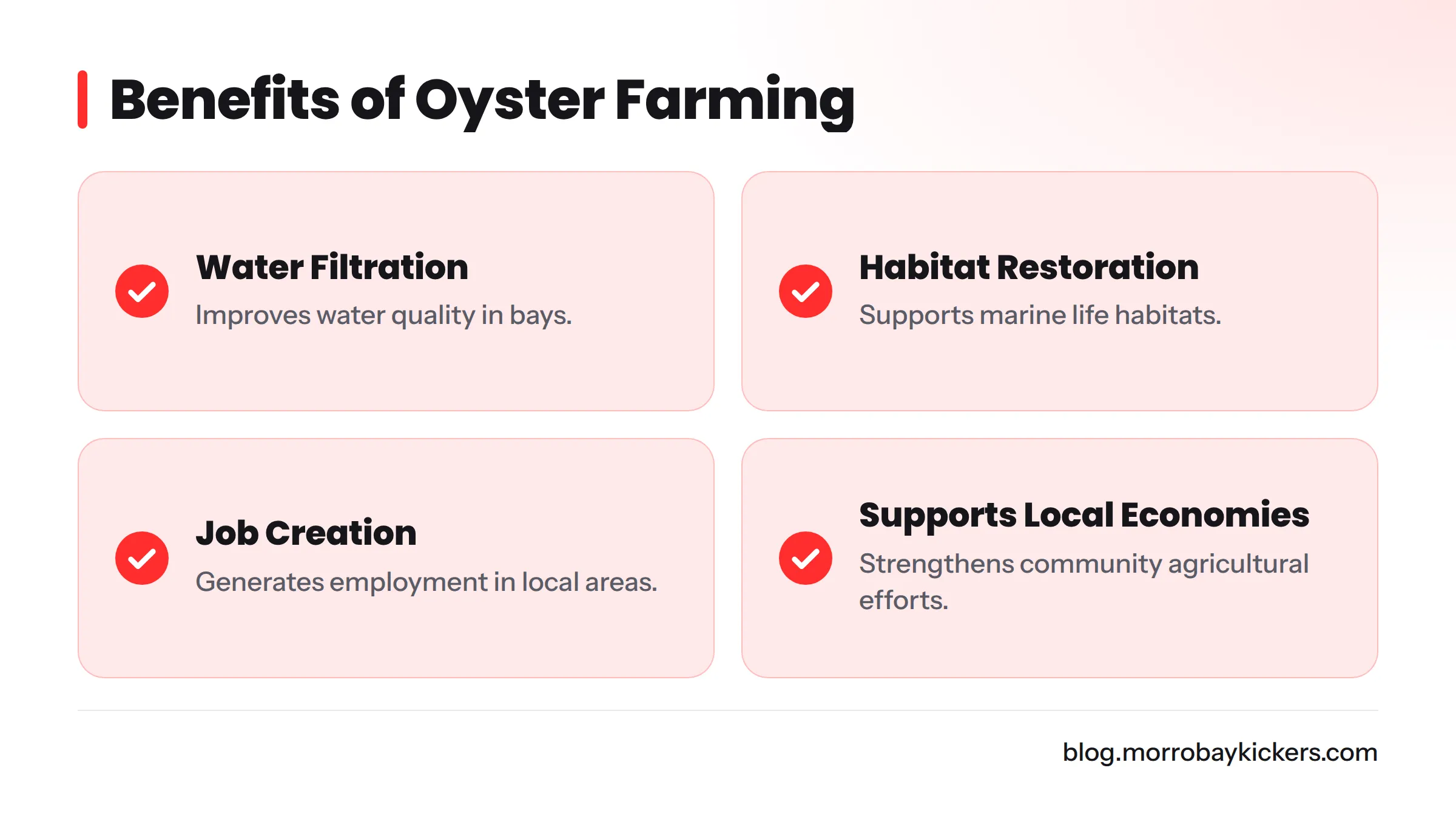
Environmental Benefits
- Water Filtration: Oysters are crucial for filtering water, significantly improving water quality in bays.
- Habitat Restoration: Farms contribute to creating habitats for other marine life.
Community Impact
Oyster farms generate jobs and support local economies. By sourcing locally, restaurants like Kicker's promote sustainability and foster community agricultural efforts.
How Kicker's Sources Local Oysters
Kicker's prioritizes sourcing oysters from sustainable local farms. This not only supports the community but also guarantees freshness and superior quality in our offerings. Collaborating with farms in the Morro Bay and Tomales Bay areas ensures our oysters are both delicious and environmentally considerate.
Culinary Uses and Recipes
Oysters are incredibly versatile in the kitchen. Here are some popular dishes:
Popular Dishes featuring Oysters
- Oysters on the Half Shell: Served raw with a squeeze of lemon.
- Fried Oysters: Breaded and fried for a crispy treat.
- Oyster Stew: A creamy soup that showcases tender oysters.
- Grilled Oysters: Topped with garlic butter and herbs and grilled to perfection.
Join Us at Kicker's
Oyster farming in California blends tradition with innovation, benefiting both the environment and local economies. We invite you to join us at Kicker's to experience the freshest oysters while supporting sustainable seafood practices.
Explore our raw oyster bar and taste the local difference!
Frequently Asked Questions
How does oyster farming work in California?
Oyster farming starts with hatchery cultivation, progressing from larvae to mature oysters through various farming techniques.
What are the benefits of oyster farming?
Benefits include water filtration, habitat restoration, and economic support for local communities.
How long does it take for oysters to grow?
Typically, it takes between 18 to 30 months, depending on the species and environmental conditions.
What techniques are used in oyster farming?
Common techniques include bottom culture and rack and bag methods.
How do oysters impact marine ecosystems?
Oysters filter water and create habitats, bolstering marine biodiversity.
Where can I find oyster farms in California?
Oyster farms are predominantly located along the California coast, particularly in regions like Morro Bay and Tomales Bay.
What is the environmental impact of oyster farming?
When conducted sustainably, oyster farming enhances water quality and aids in restoring marine ecosystems.
How does Kicker's source their oysters?
Kicker's sources oysters from sustainable local farms, ensuring high-quality standards and supporting local communities.
What popular dishes are made with oysters?
Popular dishes include raw oysters on the half shell, fried oysters, oyster stew, and grilled oysters.
What should I know before visiting an oyster farm?
It's advisable to check ahead on visiting hours and availability, and familiarize yourself with farm practices.
Are farmed oysters safe to eat?
Yes, farmed oysters are regulated and safe when sourced from reputable farms.
Can oysters be grown sustainably?
Yes, employing sustainable practices is crucial in modern oyster farming.
What types of oysters are farmed in California?
Common types include Pacific oysters and Kumamoto oysters.
How can I support local oyster farming?
Support local restaurants, purchase directly from farms, and advocate for sustainable seafood.
What regulations govern oyster farming in California?
Oyster farming is regulated by state and federal agencies to ensure health and sustainability standards.
How do weather conditions affect oyster farming?
Weather can influence survival rates and growing cycles, making careful site selection imperative.
What is the economic impact of oyster farming on local communities?
Oyster farming creates jobs, boosts local economies, and promotes community development.
What challenges do oyster farmers face?
Challenges include environmental changes, regulatory pressures, and market fluctuations.
How can I taste locally grown oysters?
Visit oyster farms or enjoy them at local eateries like Kicker's.
What is the best way to cook oysters?
Oysters can be enjoyed raw, fried, baked, or grilled; cooking methods vary based on personal preferences.