


What is Sustainable Seafood?
Sustainable seafood refers to fish and other marine life harvested in ways that allow their populations to replenish while maintaining ecological balance. This approach prioritizes the health of marine environments, the welfare of fishing communities, and the overall stability of global fisheries. By choosing sustainable seafood, consumers support practices that protect ocean health and the livelihoods dependent on fish stocks.
Criteria for Sustainable Seafood
Sustainable seafood is evaluated based on several interconnected criteria that aim to prevent harm to marine ecosystems or depletion of fish populations:
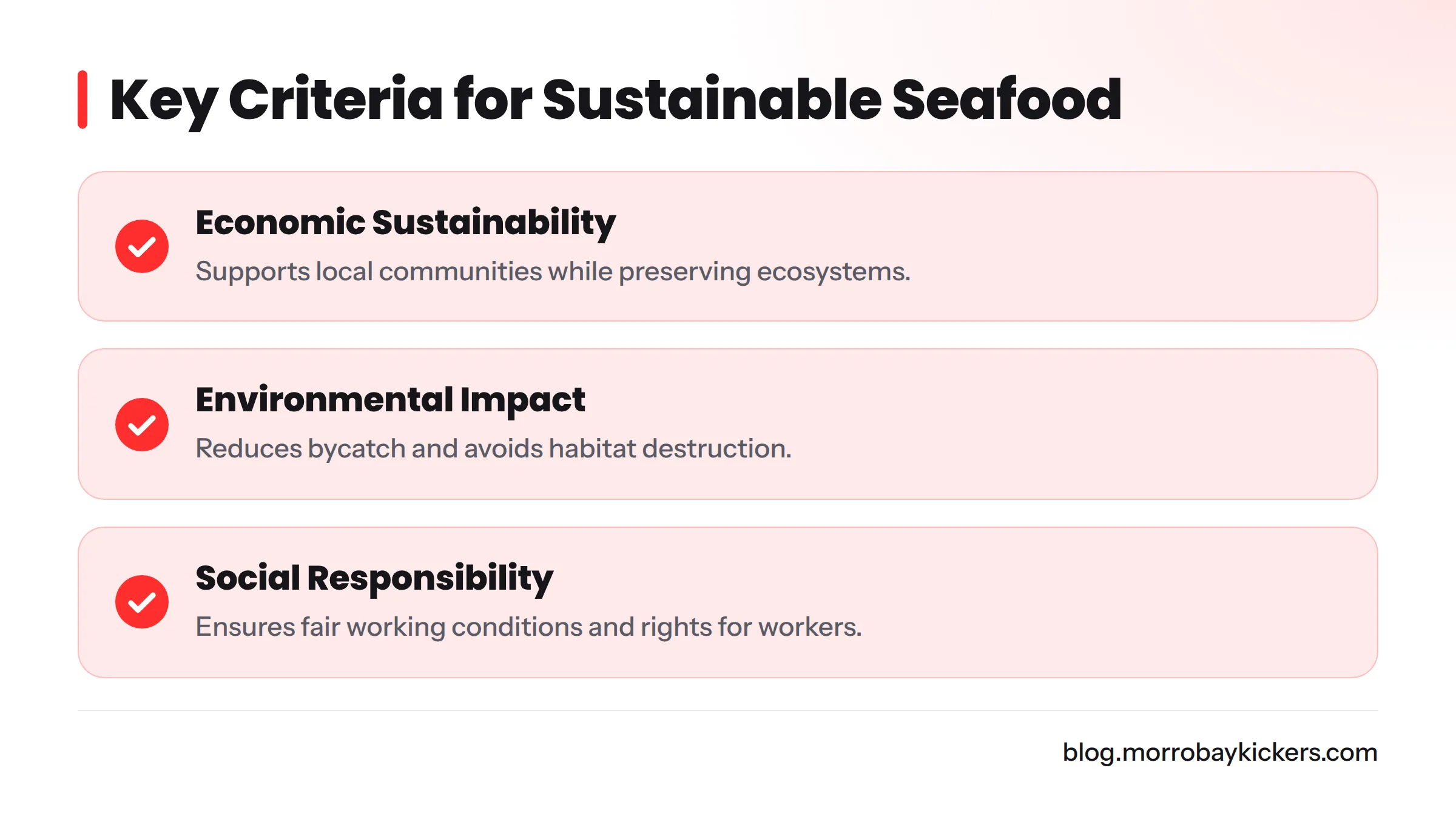
Economic Sustainability
Economic sustainability focuses on fishing practices that support local communities financially without harming marine habitats. Sustainable fisheries generate stable income and job opportunities while preserving marine ecosystems for future generations.
Environmental Impact
The environmental impact of harvesting practices is crucial for sustainability. Responsible methods reduce bycatch and habitat destruction. Avoiding harmful chemicals in aquaculture practices is essential for maintaining biodiversity.
Social Responsibility
Social responsibility ensures that sustainable seafood practices provide fair working conditions in the fishing industry. This includes respecting human rights and offering equitable pay and safe conditions for workers.
Labeling Systems for Sustainable Seafood
Multiple labeling systems exist to help consumers identify sustainable seafood options, making shopping easier.
Marine Stewardship Council (MSC)
The MSC label indicates that seafood has been certified as sustainable through rigorous assessments. This certification ensures that the seafood comes from fisheries that adhere to environmental sustainability standards, minimizing ecological impact while keeping fish populations healthy.
Aquaculture Stewardship Council (ASC)
The ASC label focuses on seafood that is responsibly farmed. Like the MSC, ASC certification ensures that fish farms follow sustainable practices, emphasizing environmental conservation and social responsibility in aquaculture.
How to Choose Sustainable Seafood
Choosing sustainable seafood can be straightforward with a few simple steps:
Checking Labels
Begin by looking for MSC or ASC labels on fish products to ensure they are sustainably sourced. Certifications from Seafood Watch can also guide consumers in making informed decisions.
Questions to Ask at Restaurants
When dining out, consider asking:
- Is the seafood sustainable?
- Where is the seafood sourced?
- What fishing methods were used?
FAQ
What is sustainable seafood?
Sustainable seafood refers to fish populations that are harvested in ways that maintain their health and productivity, protecting marine ecosystems.Why is sustainable seafood important?
Choosing sustainable seafood helps combat overfishing, supports environmental conservation, and ensures the availability of fish stocks for future generations.How can I identify sustainable seafood?
Look for certification labels like MSC and ASC, which confirm sustainable sourcing practices.What do the MSC and ASC labels mean?
MSC certifies wild-caught seafood, while ASC focuses on responsible aquaculture practices.What are the environmental impacts of overfishing?
Overfishing contributes to biodiversity loss, depletion of fish populations, and disruption of marine ecosystems.How does aquaculture contribute to sustainability?
Responsible aquaculture practices can supplement wild stocks and provide viable seafood options without depleting ocean resources.What types of seafood are considered sustainable?
Species that are abundant and harvested responsibly, including certain shellfish and fish from certified fisheries, fall under this category.Why should I care about sustainable seafood?
Caring about sustainable seafood ensures that future generations have access to healthy oceans and fish populations.How does buying local seafood help sustainability?
Supporting local fisheries can lower carbon emissions from transportation and promote economic stability in local communities.What questions should I ask at restaurants about seafood sourcing?
Inquire about the source, sustainable practices, and any certifications of the seafood they serve.
For more insights into locally sourced seafood and sustainable practices, explore our article on Sustainable Seafood at Kicker's.
To stay informed about sustainable practices, follow along with Seafood Watch recommendations.
Watch this informative video on making sustainable seafood an easy choice to see sustainable seafood choices in action.
By making informed decisions about seafood sourcing, we contribute to a healthier ocean and a sustainable future for everyone.
Related: locally caught, sustainable seafood, how a sustainable seafood restaurant works